

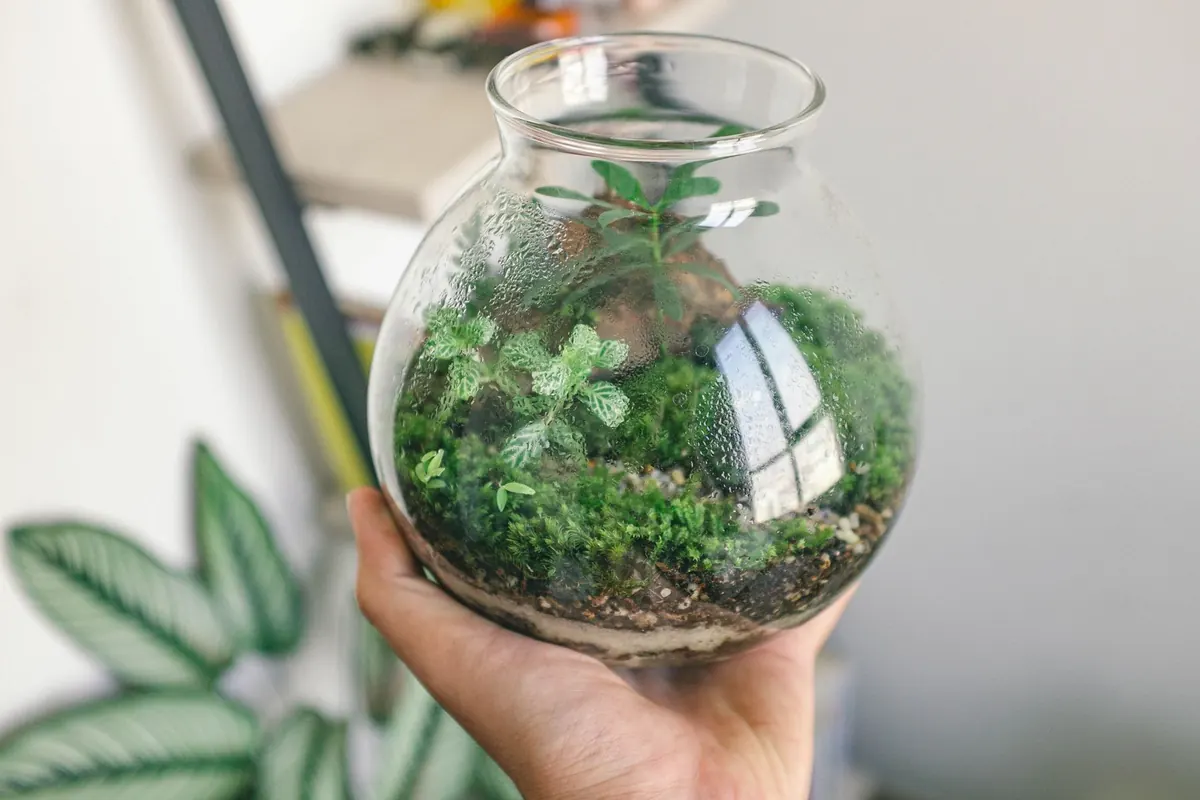
A closed terrarium is the closest thing to a self-contained garden you can keep on a windowsill. Sealed glass traps moisture, the moisture feeds the moss, and the moss keeps the humidity high enough for the cycle to repeat. Left alone, the whole thing steadies into a slow loop that asks very little of you. Moss suits the arrangement better than almost any other plant: no deep roots to rot in soggy compost, no need for bright sun, and a genuine liking for the foggy conditions that would finish off a fern. Here is how to build one that lasts, from the jar upwards.
Choosing a container that will actually work
The container decides how easy everything else will be. Wide-mouthed vessels — a Kilner jar, a sweet jar, an apothecary jar with a lid — let you plant with your fingers and reach in later to trim or remove a patch of mould. Narrow-necked glass looks lovely and is a genuine nuisance; you will need long tweezers, a funnel and patience.
Aim for at least two litres of volume on a first build. Tiny jars look charming in photographs and are much harder to balance, because a few extra sprays of water can tip a small one into a swamp while a larger body of moss and substrate soaks up small mistakes.
Three things to check before you commit:
- The lid seals. Rubber gaskets and ground-glass stoppers hold humidity; a loose cork does not.
- The glass is clear. Tinted or frosted glass steals the light the moss needs.
- The metal is minimal. Plain steel lids corrode in constant damp, leaving a rusty ring. A lined or plastic lid avoids it.
Building the layers, bottom to top
A closed terrarium has no drainage hole, so you build your own. Each layer does a separate job, and skipping one is the usual reason a sealed jar turns sour after a few months.
- Drainage, 2–3 cm. Rounded gravel, aquarium pebbles or lightweight clay granules. This is the reservoir for any water that drains down.
- Charcoal, a thin scatter. Horticultural or activated charcoal, roughly 5–10 mm deep, keeps standing water from going stale. Barbecue charcoal is not the same thing and often carries additives.
- A barrier. A single sheet of moss laid upside down, or a circle of weed fabric, stops compost silting into the gravel.
- Substrate, 5–8 cm. Moss is not hungry. Two parts peat-free houseplant compost to one part perlite or sharp sand, with a handful of coir for structure, drains well and holds just enough moisture.
In a tall jar, roughly one third drainage and two thirds substrate works well. In a shallow bowl, keep the drainage slim so the moss still has something to grip.
Which moss to use
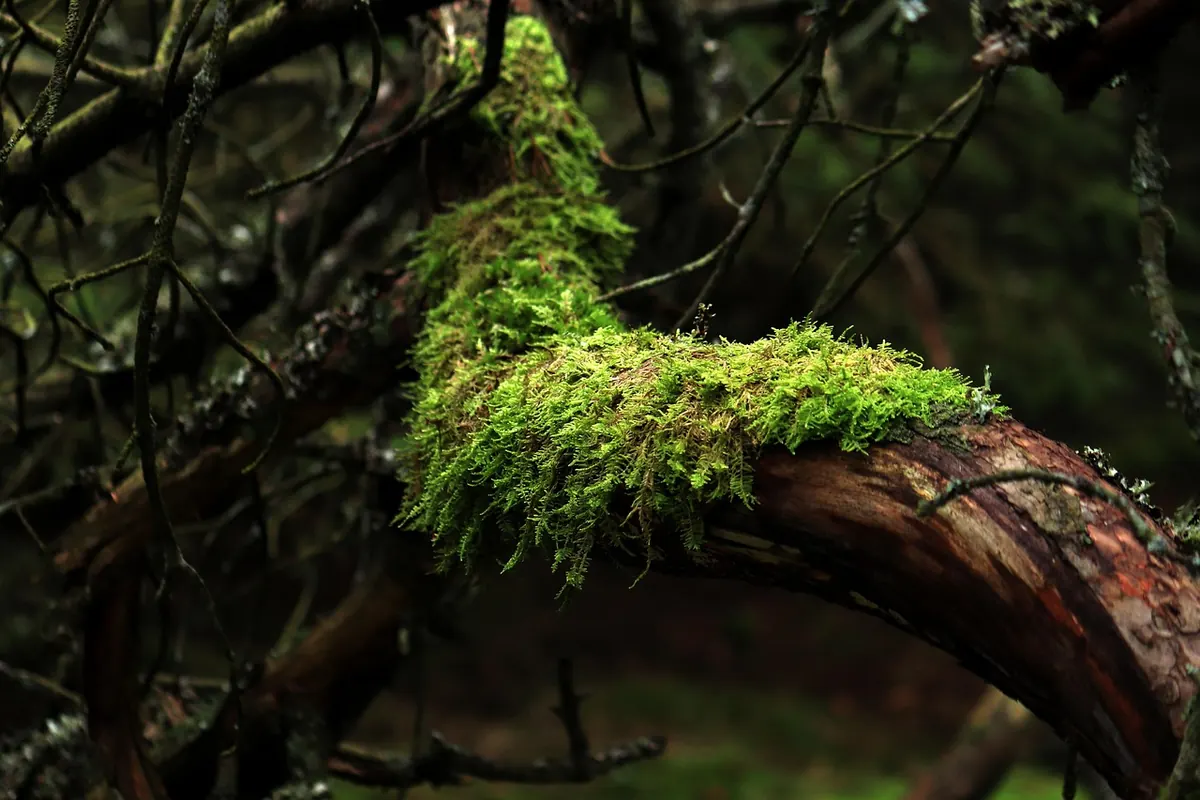
Almost any moss will grow in a closed jar, but the ones that look best form low, dense cushions rather than long straggly stems. Cushion moss grows in rounded domes and makes a striking single specimen. Sheet or feather moss spreads flat and knits into a green carpet, which is what most people picture. Sphagnum suits a deliberately boggy look, but it wants to be wetter than the rest and grows quickly, so keep it to one corner.
Collecting or buying
Garden moss from paving joints, wall tops and lawn edges is free and works well. Lift small patches with a flat trowel, take only a little from any one spot, and leave nature reserves, protected sites and other people's land alone unless you have permission. At home, rinse out the grit, pick out grass and weeds, and check underneath for slugs and their clear jelly egg clusters.
Bought moss usually arrives dry and flattened. Soak it in rainwater for ten minutes and it will plump up within a day. Whatever the source, reject patches with black, brown or crumbling bases — that moss is dead and will not come back.
Planting and the first watering
Press each piece of moss onto the substrate and firm it down so the whole underside makes contact. Air gaps are the enemy: moss takes up water through contact rather than buried stems, so never plant it like a bedding plant. Fill awkward corners with pebbles, a piece of slate or a twist of driftwood.
Then mist heavily — enough to darken the substrate, but not so much that water pools in the gravel when you tilt the jar. Rainwater or filtered water is worth the trouble; hard tap water leaves pale lime marks on glass that are almost impossible to polish off later. A useful test: squeeze a handful of substrate. It should feel like a wrung-out sponge, damp but not dripping.
Sealing, light and the first few weeks
Close the lid and put the jar somewhere bright but out of direct sun. A north-facing windowsill, or a metre back from a south-facing one, is ideal. Direct summer sunlight turns sealed glass into a slow oven, and cooked moss does not recover.
Watch the glass for the next fortnight. A healthy jar fogs in the morning and clears by mid-afternoon, and that rhythm means the water cycle is working.
- Fog that never clears: too wet. Leave the lid off for a day, then reseal.
- No condensation at all: too dry. Mist the moss and close it up.
- Patchy fog after a month: normal as the system settles.
After four to six weeks you can mostly stop fussing. Water sparingly — a light mist every few months is often plenty, and some jars go far longer. Rotate the container a quarter turn each week for even growth, and trim any stems creeping up the glass with scissors.
Common problems and what they mean
- White fuzzy mould: too wet, with too little air movement. Open the lid, remove the affected patch, hold back on water.
- Green film inside the glass: algae, from strong light and a soggy substrate. Move it somewhere dimmer.
- Moss going brown and crisp: too dry, or sitting in direct sun.
- Moss yellowing and limp: waterlogged. Check that the drainage layer is still distinct from the substrate.
- Tiny white insects that jump: springtails. Harmless, and useful — they graze on mould.
Let it settle
The most common mistake with a closed terrarium is opening it every day to see how things are going. Each time you lift the lid you let the humidity out and slow the system down. Check it through the glass instead. Keep it away from radiators and draughty doors, give it a quarter turn each week, and judge it by the fog on the glass rather than by how the moss looks on any given morning.
A well-built jar with the right layers will run for years on very little attention — a small, green, self-managing corner of the house that asks for nothing but light and a bit of restraint.
Photo: Huy Phan / Pexels
Related posts
More stories you’ll love reading